

Le Mans, stained-glass capital in the 19ᵗʰ century
After a long period of disinterest in this technique during the 17ᵗʰ and 18ᵗʰ centuries, stained glass becomes once again a major art form in the mid-19ᵗʰ century. Along with Chartres, Bourges, Metz, Clermont-Ferrand and Paris, Le Mans counts as one of the French capitals of glass painting. With its exceptional collection of medieval stained-glass windows, Saint-Julien Cathedral is a laboratory for artists, architects, historians and archaeologists who, together, rediscover this forgotten splendour.
Restoration of the cathedral’s stained-glass windows begins in 1840 under the direction of architect Pierre-Félix Delarue. He commissions a series of colour survey drawings reproducing scenes from 28 windows of the Cathedral. This precious and unique archaeological record of 400 drawings is published by the famous local archaeological scholar Eugène Hucher towards the end of the 19ᵗʰ century – and is today a national reference. A selection of the original survey drawings is presented here in the exhibition.
The cathedral soon becomes a privileged testing ground for both historians and master glassmakers and stained-glass workshops multiply in Le Mans.
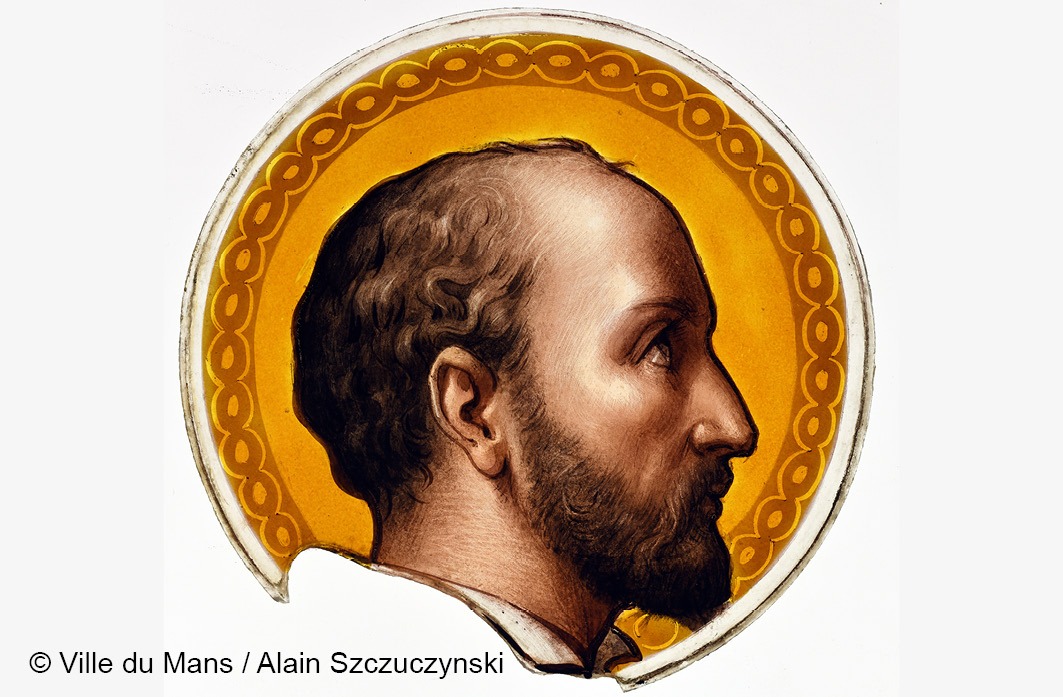
Master glassmaker Antoine Lusson is the leading figure of this ‘Le Mans school’. He earns national admiration in 1844 when he creates one of the first large stained-glass windows to brilliantly imitate those of the Middle Ages for the church of La Couture. He is subsequently commissioned to create windows for major buildings, such as the Sainte-Chapelle in Paris.
Far from the hustle and bustle of the world, the art of glass painting is also revived in Le Mans’s Carmelite convent. Without stepping out of their convent, the sisters surround themselves with talented glass painters and open their own stained-glass workshop in 1854; it will become extremely successful. Windows signed ‘Carmel du Mans’ adorn buildings throughout France and even beyond our fronteers, throughout the USA and Japan.
Around the same time, François Fialeix opens one of the city’s first stained-glass workshops, the “Manufacture du Mans.” He soon moves his flourishing workshop to Mayet, a small town north of Le Mans and produces windows for churches all over France.